
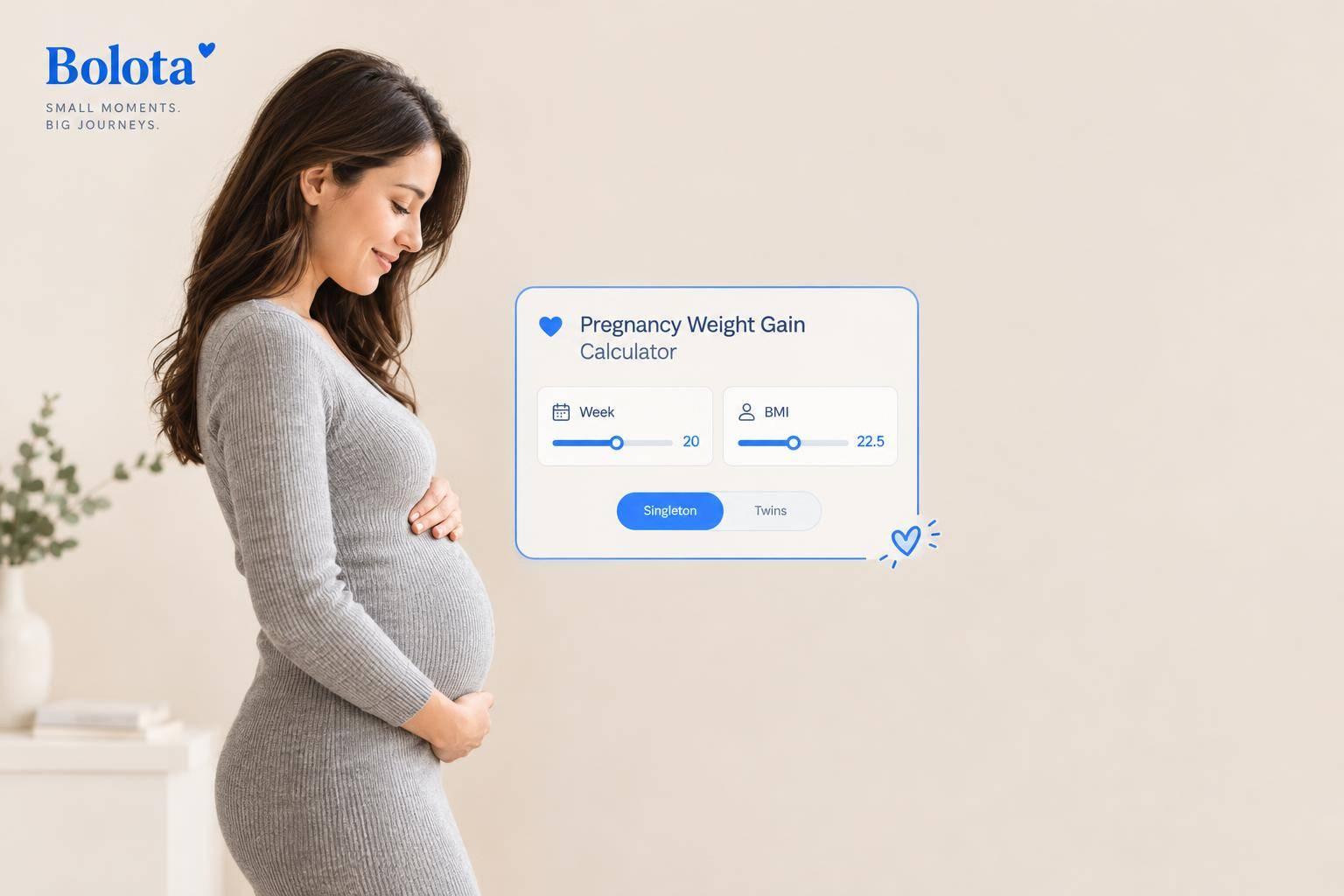
Pregnancy Weight Gain Calculator
Understand Healthy Pregnancy Weight Gain
A pregnancy weight gain calculator can help you see whether your weight gain is generally tracking within a recommended range for your stage of pregnancy. Instead of guessing, you can use your pre-pregnancy weight, height, current week, and whether you're carrying one baby or twins to get a clearer estimate.
Why BMI Matters Before Pregnancy
Most guidance starts with pre-pregnancy BMI. That number helps sort users into standard categories such as underweight, normal weight, overweight, or obese. From there, recommended total gain ranges are adjusted to better reflect your starting point rather than using a one-size-fits-all target.
What This Tool Shows
This calculator estimates your BMI, explains your category, and shows a suggested total gain range. For singleton pregnancies, it can also display a typical weekly gain range after the first trimester. If you add your current weight, the tool compares your gain so far with a general guideline for your selected week.
A Helpful Guide, Not a Diagnosis
A pregnancy weight gain calculator is best used as a simple planning and tracking tool. Weight changes can vary for many reasons, so the results are informational only. If anything feels off, or if you want a more tailored target, your prenatal care provider is the right person to ask.
FAQs
How does this pregnancy weight gain calculator estimate my range?
It starts with your pre-pregnancy BMI, which is calculated from your weight and height before pregnancy. From there, it uses widely accepted pregnancy weight gain guidelines to match your BMI category with a recommended total gain range. If you're pregnant with one baby, the tool can also show a typical weekly gain range during the second and third trimesters. If you enter your current weight, it estimates how much you've gained so far and compares that with a general week-by-week trajectory.
Are the results different for twins?
Yes. Twin pregnancies usually have higher recommended total weight gain ranges than singleton pregnancies, and the guidance is less focused on a simple weekly pattern. That's why the calculator shows the total recommended range for twins and notes that weekly changes can vary more from person to person. Your obstetrician or midwife may give you a more personalized target based on your health history, appetite, symptoms, and how the babies are growing.
Can this tool tell me if my weight gain is healthy?
It can give you a helpful estimate, but it can't replace medical advice. Weight gain in pregnancy isn't perfectly linear, and many factors can influence what's normal for you, including nausea, fluid retention, activity level, and underlying health conditions. Use the result as a general reference point, then bring any concerns about gaining too little or too much weight to your prenatal care provider for advice tailored to your pregnancy.